For international applicants to US universities

The US application is a system.
We teach you to read it.

Nobody at your school has filled one of these in. The activities list, the supplements, the CSS Profile, the recommendation etiquette — none of it maps onto the system you grew up with. Sterling Admissions teaches the whole thing, module by module, and pairs you with a current student at a top US university who did it themselves.

Mentored by students currently at Harvard · Yale · MIT · Stanford · Princeton · Columbia

Europe United States
2mentoring programs
12sessions per fellowship
1:1every session, live
6universities represented
What Sterling Admissions is

Two things, and we're precise about both.

01

Structured programs, mentored one-to-one

Two programs, each a fixed curriculum delivered live by a mentor rather than a video library. The Sterling Fellowship runs twelve weeks for students applying now. The Pioneers Program works with younger students on the choices that get made years before an application opens.

Every session has a written plan behind it, so your mentor arrives having prepared, and the twelve weeks build on each other instead of drifting.

02

Mentoring, not tutoring

A tutor teaches you a subject. A mentor helps you work out what you are doing and why, then tells you honestly whether the thing you have made is any good. Our mentors are current undergraduates at Harvard, Yale, MIT, Stanford, Princeton and Columbia — some who applied from abroad, some who grew up inside the US system.

They will not write your essay. They will read it properly and tell you what a committee will see, which is more useful and considerably rarer.

And what we are not

We're an education company. We teach you how the application works and how to make yours stronger. We don't fill in forms on your behalf, we don't contact universities for you, we don't guarantee admission to anywhere — be careful with anyone who does — and we don't advise on immigration, visas, tax or law. Those belong with your university's international student office or a licensed professional, and we'll tell you so plainly rather than guess.

We also don't sell a video course. Everything we teach is delivered live, by a person, to one student. A self-paced library is in production for a later cycle — until it exists, we're not going to charge for it.

How it works

Three steps, no mystery.

01

Apply

A short application: grades, a brief personal statement, your activities and target schools. Reviewed holistically by a person, not filtered by a cutoff.

02

Get matched

If you're offered a place, we match you with a mentor on subject, background and what you're weakest on — not whoever is free.

03

Work through the program

Weekly one-to-one sessions on video, each with a prepared plan, written recap and agreed next steps. You finish with a real application, not notes about one.

BD
Bendegúz Dörnyei
Founder
Why this exists

I applied to American universities from a Hungarian secondary school, and I got almost everything wrong the first time.

Nobody in my family had done it. My school had no counsellor who knew what the Common App was. I found out what an "activities section" was supposed to prove about three weeks before a deadline, and I wrote a personal statement that read like a CV in paragraphs because nobody had told me it shouldn't.

What I eventually worked out — slowly, and mostly by getting it wrong — is that the American application isn't a test of how impressive you are. It's a document with its own grammar. Readers move through it fast, looking for a specific kind of coherence. Once you can see that structure, most of the advice that circulates in Europe turns out to be either wrong or beside the point.

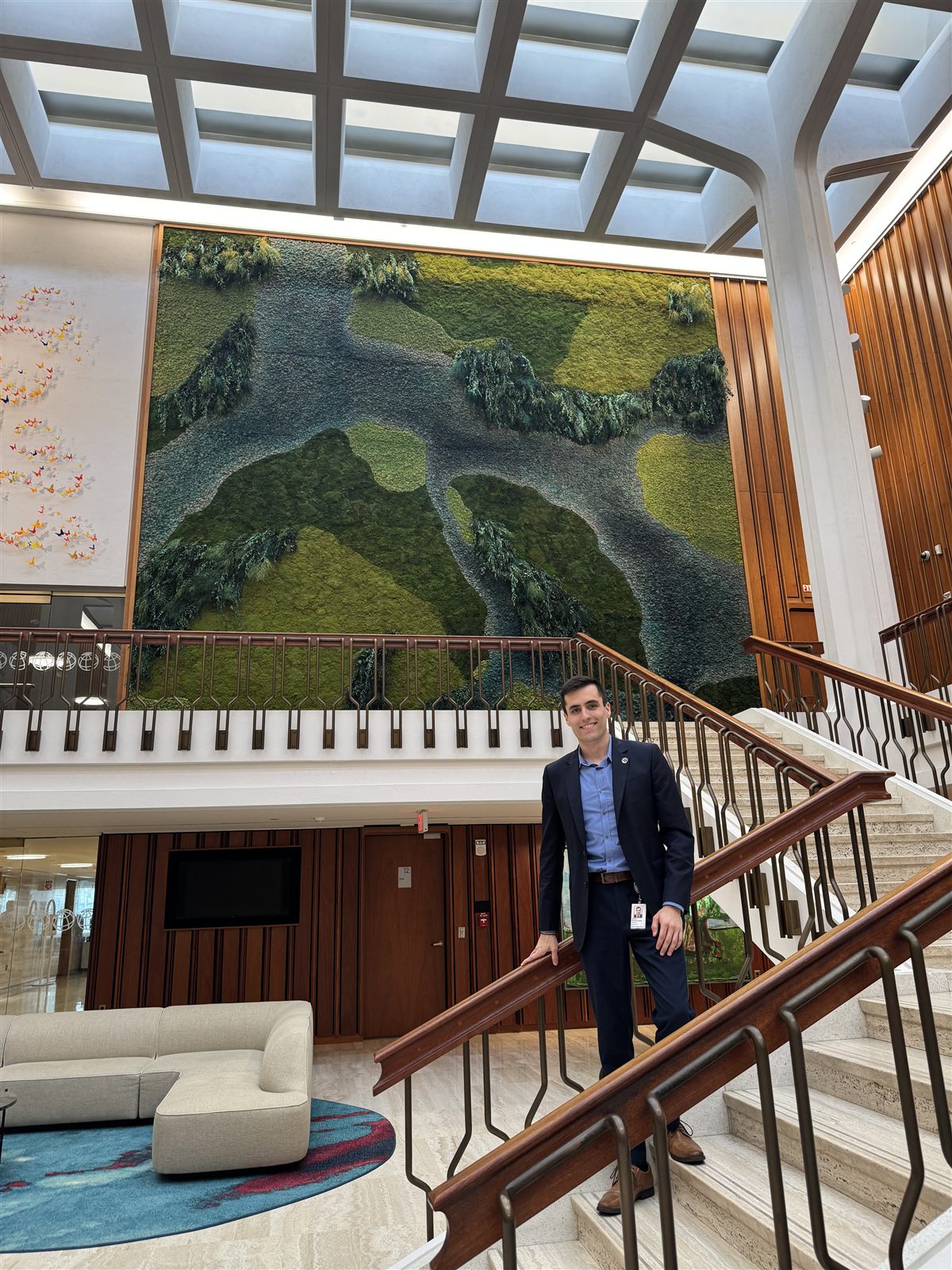
I was admitted to Yale, finished a dual degree in Statistics & Data Science and Global Affairs with honors, and I'm now back there for a Master in Public Policy alongside a fellowship at the World Bank. In the years since, I've had the same conversation dozens of times with students from Budapest, Warsaw, Athens, Lisbon — all of them bright, all of them missing the same handful of things nobody had ever explained.

The arctic tern flies pole to pole every year, navigating by things nobody taught it. That is more or less what an international applicant is asked to do.

Sterling Admissions is that explanation, written down properly. Not a consultancy that takes your application away from you and hands it back polished. A course that teaches you to read the system, and mentors who've sat on the other side of it and will tell you the truth about your draft.

Mentors

Current students at six US universities.

Some applied from abroad and know exactly what you're facing. Some grew up inside the US system and can tell you how it reads from the other side. Both perspectives matter, so we hire for both.

Studying at a US university?

We take on a small number of mentors each cycle. Sessions are paid, scheduled around your term, and you keep 70% of the fee.

Apply to mentor
Programs

Two programs. Pick the one that matches where you are.

Both are delivered live, one-to-one. Choose a program to see every session in it.

In production

The self-paced video library

A recorded version of the curriculum is being built and will open to Fellowship and Pioneers members at no extra cost when it's ready. It isn't finished, so we don't sell it — everything today is taught live by a mentor.

Applying

Places are limited, and we read every application.

Each cohort is capped by how many students our mentors can genuinely take. Applications are reviewed holistically — grades matter, but so does what you write and what you're trying to do.

Introductory pricing for the current cohort. It returns to the standard rate once these places are filled.

What the application asks for

  • Your grades — a transcript or predicted grades. There is no fixed cutoff.
  • A brief personal statement — around 300 words on what you're trying to do and why.
  • Your activities — what you do outside class, roughly how much time it takes.
  • Target schools — even a rough list, or a note saying you don't have one yet.
  • English at B2 or above — self-declared. The whole program runs in English.
  • Optional supplement — upbringing, identity, anything that shapes how you'd read a US application. Genuinely optional.
  • What you read, watch or listen to — be specific. It tells us more about how you think than a grade does.

Write it yourself

We ask you to affirm that the application is your own writing, without AI assistance. We can't detect it and we're not going to pretend otherwise — but a mentor spends twelve weeks working on your voice, and starting from someone else's is a waste of the place. If you're stuck, write badly and send it anyway. That we can work with.

Need-based aid halves tuition on both programs and is awarded on merit and circumstance together — say so in your application. 14-day refund from your first session, no questions asked.

Q&A

The questions we actually get asked.